fbpx

Turning Stress into Success: A Student’s Guide to Thriving Under Pressure.

Ahmed Saadi (PhD, MBA, CEng)

26.02.2024

As a new semester begins, many students find themselves feeling stressed. This can be due to several reasons. Some might feel overwhelmed by the workload in this final semester, while others might have to resit exams they did not pass previously. Additionally, balancing other responsibilities with studies can increase stress levels.

Another stress factor is what’s known as second-hand stress: we naturally pick up on others’ emotions, which can make us anxious. This is particularly true in environments like classrooms where many non-verbal cues and conversations are visible and audible. The symptoms of stress are universal, you might recognise the signs: a racing heart, short breaths, perhaps a red face or tense shoulders. You feel ready for action but not for calm, thoughtful work.

If you are experiencing this, remember, you are not alone. Everyone faces stress, whether from studying, working or other life situations. However, every day, we can choose how to view our stress. Research has shown that our attitude towards stress greatly influences its impact on us. Instead of seeing ourselves as victims of stress, viewing it as a negative force, we can recognise that such an attitude can harm our physical and mental health in the long run.

Consider reframing stress, instead viewing it as a boost to your performance, preparing you to meet challenges head-on. A study suggests that when we view the physical signs of stress—like a fast heartbeat and quick breathing—as our body gearing up for better performance, we can feel more confident and less anxious. This perspective can change our physical response to stress, making us feel more joyous and courageous rather than overwhelmed.

See stress as a motivator: a tight deadline, an exam or a challenging project can push us towards excellence—see Exhibit 1. As you progress, be conscious of how you perceive stress. Trust in your ability to manage it and see it as an opportunity for growth. How we respond to stress is a critical choice we make.

Daniel Goleman, a psychologist and leadership expert, talks about “amygdala hijacks,” where intense emotions lead us to act impulsively, often with regret later. The amygdala, a small part of the brain, triggers a flood of stress hormones when it senses danger, leading to these hijacks. In today’s world, this reaction is rarely helpful. When hijacked, we might focus solely on the perceived threat and miss other solutions. However, by engaging our rational brain, we can regain control and see things more clearly.
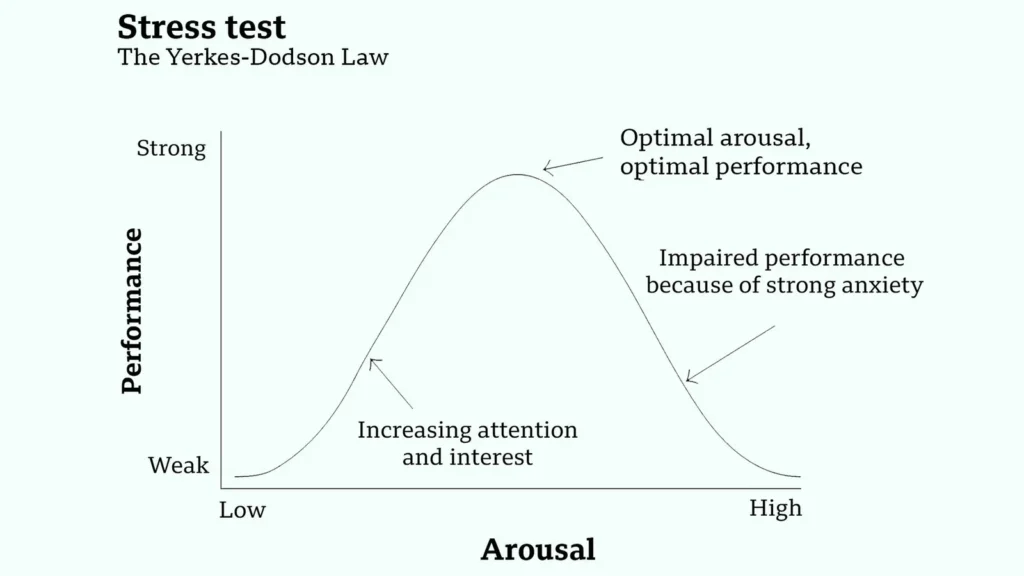
It is vital to find the balance between stress as a motivator and stress as a source of burnout is the key to harnessing our performance potential (Credit: BBC)

Exhibit 1: It is vital to find the balance between stress as a motivator and stress as a source of burnout is the key to harnessing our performance potential (Credit: BBC)

  1. Change your perspective. Instead of getting upset with negativity, try to understand and label your emotions and view them positively.
  2. Build positivity. Counteract negativity with positive actions. Smile and always start conversations on a positive note.
  3. Prepare mentally. Before entering stressful situations, remind yourself of two or three things you are grateful for to create a shield against stress.

By adopting these strategies, you can manage and even utilise stress to your advantage.

Explore more

Short Courses
Business Management and Foundation Programme
Extended Project Qualification

Guiding Students Towards Success

Supporting our students’ careers and livelihoods, not just preparing them for jobs

By Ahmed Saadi (PhD, MBA, CEng)

Adobe Stock / Smile Studio AP

Since its inception in 2016, London Professional Training College (LPTC) has embarked on a noble journey: providing quality education to students who want a better life. Our focus has always been guiding our students toward career success.

“We are aiming high when it comes to what we want for our students, and how we can deliver it to them. We don’t want to be just another college, but the recognised leader when it comes to helping students better their careers, and therefore their lives. By focusing on the highest standards of education, available to students of all backgrounds and circumstances, we know we can make a real difference in the lives of everyone who chooses to learn with us.”

Feras Abed
College Director

Universities and Colleges meet many new student faces every year, given that our London community has become more diverse than ever, many observers will see more diversity than ever, too. This diversity is not just visible in appearances but also in the unseen disparities in privilege, which often lead to varied educational outcomes. A significant challenge is faced by those unable to complete their degrees at traditional universities or colleges. Such students often confront higher expectations in their professional careers.

Today’s workplace has its own challenges where it faces higher expectations from employers and falling optimism from students. For every student with parents or siblings who attended college before them, there are first-generation students who are the first in their families to pursue higher education and do not have close support from someone who attended college. This is where LPTC steps in, bridging this gap with industry-focused curricula. Our courses are specifically designed to endow students with the vital skills needed to thrive in today’s competitive workplace.

Our students have higher expectations than ever, are facing a more competitive labour market than ever and are more stressed out than ever. They also need and want guidance more than ever. LPTC offers an industry-relevant curriculum designed to equip students with essential skills to succeed in the workplace.

Alongside the meticulously crafted curricula, LPTC offers its students personal tutoring and career support opportunities. Focusing not only on building the students’ academic skills, but also on creating resume-building opportunities.

LPTC plays an active role in the student’s career success by implementing a variety of methods to help disadvantaged students catch up with others and allow them to gain wider and holistic perspectives. Having taught a module this semester, Financial Management, many students have told me how much I have opened their minds—and changed their lives for good.

Explore more

Short Courses
Business Management and Foundation Programme
Extended Project Qualification

Navigating Success: Understanding Benefits of Educated Failures

Not every failure leads to negative outcomes. Some failures can provide meaningful insights.

By Ahmed Saadi (PhD, MBA, CEng)

Uuganbayar
Adobe Stock / Uuganbayar

Let’s face it no one likes or wants to fail, yet not every failure is detrimental! Indeed, some failures are highly beneficial as they offer critical learning experiences for both individuals and organisations. Based on extensive research I have undertaken; I have learnt that failures can be classified into three categories:

The first type is preventable failures that occur in predictable operations. These failures are often seen negatively since they occur in processes that are typically reliable. The root causes usually include factors like insufficient training, lack of attention or inadequate skills. Fortunately, these issues are relatively straightforward to identify and rectify, often with simple solutions like implementing checklists.

The second category involves unavoidable failures within complex systems. These failures stem from the unpredictable nature of complex tasks. While best practices in safety and risk management can prevent some issues, minor errors in these processes are a natural occurrence. Viewing these small failures as wholly negative is not constructive. The focus should be on rapidly detecting and addressing these minor issues to prevent larger, more significant problems. For instance, in healthcare settings, many accidents are the result of small, overlooked errors in patient care.

Adobe Stock / Nuthawut

The third type of failure, and arguably the most beneficial, is intelligent failures that occur at the forefront of technology and innovation. These failures are essential in gaining new knowledge that can position you ahead of your competitors and drive future growth. Activities like developing new materials, pharmaceuticals, founding a new business or designing a novel product often require the swift creation of these productive failures. Conversely, unintelligent failures typically occur when experiments are unnecessarily scaled up before the proof of concept.

Understanding the difference between good and bad failures is crucial. Recognising and distinguishing between them enables you and your organisation to anticipate and avoid negative failures while fostering beneficial ones.

Explore more

Short Courses
Business Management and Foundation Programme
Extended Project Qualification

The Top Three Benefits of Regularly Reviewing Your Goals

Do not simply establish and accomplish goals—consistently review them to make more informed choices going forward.

By Ahmed Saadi (PhD, MBA, CEng)

dontree
Adobe Stock / dontree

When talking about goals, we often focus on setting and achieving them. Yet, a crucial, often overlooked aspect is evaluating our goals to ensure they align with our true objectives. Let’s explore three perspectives, three vital questions, to guide us in making wiser decisions about our goals.

Firstly, consider the possibility that your goals might lead to unexpected negative outcomes. I learnt this the hard way. I once thought it would be brilliant to play football three days a week with friends. It sounded ideal: exercise and quality time. However, our only available time was at 10:00 PM. A year later, I found myself too drained to be productive for the next day. Despite its noble intent, this goal had detrimental effects, forcing me to eventually give it up.

Secondly, reflect on whether your goal could be inadvertently counteracting your intended aim. I once pursued the goal of achieving a better work-life balance. I meticulously planned my schedule every week, allocating time evenly. But after a few months, the rigid scheduling left me too overwhelmed to enjoy any of my time. Realising this, I had to let go of this goal.

Lastly, recognise that sometimes we outgrow our goals. On several occasions, I have been offered job opportunities or consulting projects that would have thrilled me years ago, but they no longer suited my current career trajectory or future plans. In such instances, I had to decline, understanding that they were not the right fit anymore and could derail my progress.

These experiences underscore the importance of not just setting and achieving goals, but continuously re-evaluating them. This ensures our efforts are genuinely aligned with what is best for us in our evolving journeys.

Explore more

Short Courses
Business Management and Foundation Programme
Extended Project Qualification

Breaking Down Big Goals into Manageable Smaller Ones

Having really big goals can be super stressful, especially when they seem too huge to finish in just one day.

By Ahmed Saadi (PhD, MBA, CEng)

Adobe Stock / allvision

I often set myself these enormous goals and then worry about them for weeks. Like, I’d think, “Wow, I have this massive report to write and research!” I’d spend half my days just feeling stressed because the goal was so big – and most of the time, I was the one who decided to set it in the first place.

Adobe Stock / tete_escape

What really helps me feel less stressed is breaking the goal into smaller parts, ones that I can handle within a day or a few days. For example, I used to be frightened about writing a big report. Then I started setting smaller goals, like writing just one paragraph. After finishing one paragraph, I’d feel great and think, “Hey, I did it! Let’s write another one.” And that’s how I gradually got the report done, one paragraph at a time, then a page at a time.

The report was long in the end, but by setting these mini-goals, I did not feel overwhelmed. I just focused on writing a bit at a time, knowing I’d get to the end eventually.

So, if you are feeling overwhelmed by big goals, try breaking them into smaller, doable tasks. Celebrate each small goal you achieve. This way, instead of always feeling like you are not reaching your big goal, you will keep feeling successful with each small goal you complete. And that is a great way to turn stress into a sense of achievement.

A big goal needn’t intimidate your team. By dividing it into manageable segments and evaluating potential risks, you enhance your likelihood of achieving success.

A friend of mine works in the field of aerospace engineering, with a special focus on lightweight and sustainability in jet engines. Their company had traditionally excelled in designing standard jet engine components, which were known for their durability and performance. However, there was a pivotal year when the company decided to shift its focus towards pioneering sustainable and lightweight solutions for jet engines.

This transition was a significant goal. In the world of jet engines, weight reduction without compromising safety is paramount. Unlike conventional jet engine design, where the primary focus is on performance and durability, this new direction prioritised eco-efficiency and minimal weight. When this challenge was presented by the senior leadership, it posed a significant test for the technical team, which had been deeply rooted in traditional jet engine design.

Initially, the team was somewhat overwhelmed. The goal seemed incredibly ambitious. Their expertise lies in conventional jet engine technology, not in the nuanced field of lightweighting and sustainability. Yet, they did not let this colossal goal intimidate them. Instead, they tackled it by breaking it down into smaller, achievable tasks. The first step was to conceptualise a jet engine that was lighter yet equally robust, followed by identifying specific actions required in each department.

One of the immediate challenges was establishing partnerships with new suppliers who specialised in lightweight and sustainable materials. They also needed to address skill gaps within their team. Did they need to train existing staff in new techniques, or was it necessary to bring in fresh talent? Eventually, they opted for both.

However, a shift in mindset was equally crucial. Moving from traditional jet engine design to a focus on sustainability and lightweighting involved not just technical changes, but also a philosophical shift in how they viewed jet engine production. This was especially true given the potential risks involved in such a transformative approach. It was essential for the senior leadership to understand and embrace this new perspective.

Jirsak
Adobe Stock / jirsak

Navigating through this transition took about six months, involving detailed discussions and planning with various stakeholders, including design teams and sustainability experts. Ultimately, their perseverance paid off.

My friend’s key takeaway from this experience was enlightening: When faced with a large goal, do not let it overwhelm your team. It is crucial to break it down into manageable parts and to be fully aware of the broader implications, such as the need for a shift in mindset and a comprehensive approach to risk management, especially when venturing into new territories like sustainable and lightweight jet engine design.

Explore more

Short Courses
Business Management and Foundation Programme
Extended Project Qualification

Setting the Stage for Success—Why Purpose and Goals Matter in Your Career

Establishing goals, both personally, professionally and for your team, translates a sense of purpose into actions.

By Ahmed Saadi (PhD, MBA, CEng)

target
Adobe Stock / Kiattisak

I am a firm advocate for the idea that having a clear purpose can guide us to find meaning and fulfilment in our work. It is a powerful motivator, driving us to face challenges, seize opportunities and grow both individually and as a team.

When you establish goals for yourself or alongside your team, it is like giving practical expression to this sense of purpose. Having a distinct objective, especially one that aligns with your organisation’s strategy, unites the team and directs everyone towards a meaningful target.

Pyroll
Adobe Stock / Pyroll

Goals act as a navigational tool, much like a compass plotting a course. They provide the necessary direction for achieving both immediate and long-term outcomes. But they offer more than mere guidance; they can be exciting, challenging, enjoyable and bring people together.

Reflect on a time when you and your team set a challenging goal, worked relentlessly towards it and successfully achieved it. Let me draw from a personal experience in Research and Development (R&D), particularly when I was involved in developing a digital solution for the offshore renewable energy industry.

This journey began with a clear, yet ambitious goal: to create a digital platform that could optimise the performance and maintenance of offshore renewable energy installations. The task was daunting, considering the unique challenges of the offshore environment, which included harsh weather conditions, logistical complexities and the critical need for sustainable energy solutions.

Our team was diverse, comprising engineers, data scientists and environmental experts. We embarked on this project, driven by our purpose, knowing that our work could significantly impact the operational efficiency and sustainability of renewable energy sources. The project required us to integrate advanced data analytics, machine learning algorithms and remote sensing technologies. Our aim was not just to enhance operational efficiency but also to contribute to the broader goal of reducing carbon footprints in energy generation.

After months of rigorous research, development and testing, we finally reached our goal. We developed a state-of-the-art digital tool that provided real-time analytics and predictive maintenance capabilities. This innovation not only improved the efficiency of offshore renewable energy installations but also helped in mitigating the environmental impact.

The day we deployed our solution and saw it successfully function in a real-world offshore setting was a moment of triumph. This experience from my R&D days in the renewable energy sector remains a highlight of my career. It stands as a testament to the power of goal setting, purpose and teamwork in overcoming complex challenges and contributing to meaningful, sustainable advancements.

Therefore, honing your goal-setting skills can yield profound and enduring benefits, extending far beyond just accomplishing tasks.

Explore more

Short Courses
Business Management and Foundation Programme
Extended Project Qualification

Success—How High Achievers Accomplish Their Goals

By Ahmed Saadi (PhD, MBA, CEng)
15.11.2023

Accomplished individuals attain their objectives not due to their identity but owing to their actions.

Have you ever wondered why you are able to accomplish certain goals effortlessly, yet struggle with others? If this puzzle seems familiar, you are not alone. The common belief that our inborn talents solely drive our success is only a fragment of the bigger picture. In truth, decades of research indicate that the success in reaching goals lies not just in who we are but more critically, in our actions. Here is a distilled essence of various psychology studies offering four practical tips to set and achieve your objectives effectively.

It is not enough to have a vague idea of what you want to achieve. Specificity is key. For instance, a general goal to improve effective communication skills lacks clarity. Instead, aim for something concrete like, “I will respond to every email within one-working day.” This leaves no ambiguity about what you need to do and lets you easily track your progress.

high achiever illustration
calendar illustration

In our busy lives, juggling numerous goals can lead to missed opportunities and sometimes a sense of overwhelming. The solution lies in meticulous planning. Do not just hope to find time; create it. For example, you might decide to dedicate 30 minutes at 9:00 AM. on Monday, Wednesday and Friday for researching new sales leads. Studies have demonstrated that such planning can enhance your chances of success by up to three folds.

Many believe that intelligence and talent are fixed traits. This mindset can trap us in a cycle of trying to prove ourselves instead of developing new skills. Shift your focus to a ‘get better’ mindset. Concentrate on developing abilities rather than striving for unattainable perfection.

Intelligence illustration
Thought illustration

The more we try to suppress a thought, the more it dominates our mind. This principle applies to behavior as well. Instead of focusing on what not to do, concentrate on what to do. For instance, if you’re working on controlling your temper, make a plan like, “When I feel angry, I will take three deep breaths.” This approach can gradually erode the bad habit.

Remember, you do not have to transform who you are to become more successful. It’s your actions that define your success, not your inherent qualities. By focusing on these strategic actions, you can steer yourself towards achieving your goals more effectively.

Explore more

Short Courses
Business Management and Foundation Programme
Extended Project Qualification