

MODERN FOREIGN LANGUAGES
Speaking Examinations
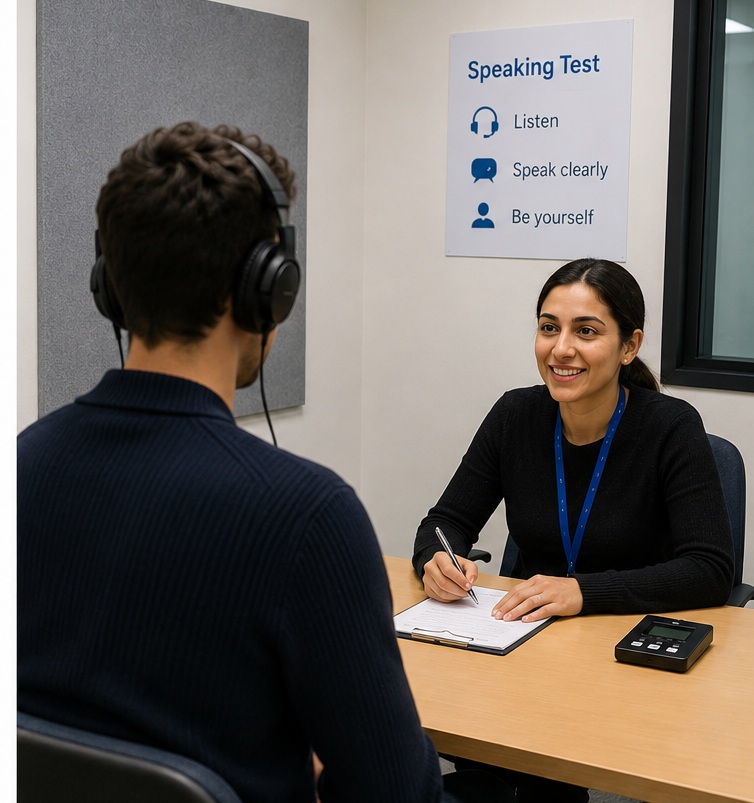
What the Speaking Examination Assesses
Modern Foreign Languages qualifications normally assess listening, reading, writing and speaking. The speaking component measures the candidate’s ability to communicate accurately, confidently and spontaneously in the target language.
- Pronunciation and clarity
- Fluency and spontaneous communication
- Grammatical accuracy
- Range and accuracy of vocabulary
- Understanding and appropriate responses
- Ability to develop, explain and justify opinions
Qualifications Covered
LPTC supports private candidates across a range of language qualifications, subject to awarding body rules and the availability of an approved speaking examiner.
- GCSE Modern Foreign Languages
- IGCSE Modern Foreign Languages
- Cambridge International AS & A Level
- Pearson Edexcel International A Level
- UK AS and A Level
Before You Book
- Check the exact qualification, level, awarding body and language before applying.
- Read the official specification so you understand the speaking format and preparation requirements.
- Confirm that you are available throughout the official speaking examination window.
- Prepare any required presentation, candidate form or Independent Research Project.
- Contact the Exams Team before booking where you require only the speaking component or intend to sit written papers elsewhere.
Speaking dates are not normally chosen freely by candidates. They depend on the official examination window, awarding body requirements and examiner availability. Once arrangements are confirmed, LPTC will send the date and time by email.
What Happens on the Day
- Arrive at least 30 minutes before the scheduled appointment.
- Report to Reception and present valid photographic identification.
- Complete registration and listen carefully to the Exams Team’s instructions.
- Where applicable, enter a supervised preparation room and use only permitted materials.
- Meet the approved examiner and complete the assessment according to the published specification.
- The assessment is digitally recorded as official examination evidence.
- Leave the examination area quietly and keep all examination content confidential.
Typical Examination Formats
GCSE and IGCSE
- Role play based on a realistic situation
- Photo card, stimulus card or picture-based discussion
- General conversation on familiar and broader themes
- Supervised preparation time where permitted by the specification
Candidates should answer in full sentences, expand answers with reasons and examples, and use varied vocabulary and grammar.
AS and A Level
- Structured discussion of prescribed themes
- Spontaneous follow-up questions
- Presentation or topic discussion where required
- Independent Research Project for relevant UK A Level specifications
- More advanced analysis, justification and sustained interaction
At this level, candidates are expected to communicate confidently, analyse issues, support opinions and respond naturally to unexpected questions.
Preparing Effectively
- Start several months before the assessment.
- Create a balanced plan covering vocabulary, grammar, pronunciation, listening and speaking.
- Learn vocabulary by topic and practise it in complete sentences.
- Speak regularly with a teacher, fluent speaker or language partner.
- Record yourself answering examination-style questions.
- Listen to authentic language through news, podcasts, films and educational resources.
- Practise expressing the same idea in different ways rather than memorising a script.
- For an IRP, know the topic thoroughly and anticipate detailed follow-up questions.
Examination Day Rules
- Bring valid photographic identification.
- Switch off mobile phones and smart devices before registration.
- Do not take unauthorised notes, headphones, recording devices or materials into the room.
- Follow all instructions from the examiner and Exams Team.
- If you arrive late, report immediately to Reception; the assessment can proceed only if regulations and examiner availability allow.
- If illness or exceptional circumstances prevent attendance, notify LPTC as soon as possible and provide evidence where requested.
Recording, Security and Confidentiality
Speaking examinations are digitally recorded because the recording forms part of the official evidence used for marking or moderation. Recordings, candidate information and confidential materials are stored and transferred securely.
- Candidates must not make their own recording.
- Question cards and stimulus materials must not be copied, photographed, removed or shared.
- The recording cannot normally be paused, edited or restarted except where a genuine technical issue occurs and awarding body procedures permit it.
- Any attempt to gain an unfair advantage or disclose confidential content may be treated as malpractice and reported to the awarding body.
- Candidate data is processed for legitimate examination purposes in line with data protection requirements.
Timetable for summer 2027:
| Subject | Date (GCSE) | Date (A-Level) |
| Spanish | TBC | TBC |
| French | TBC | TBC |
| German | TBC | TBC |
| Arabic | TBC | Not required |
| Turkish | TBC | Not required |
| Chinese (Mandarin) | TBC | TBC |
| Chinese (Cantonese) | TBC | TBC |
| Japanese | TBC | Not required |
| Hebrew | TBC | Not required |
| Italian | TBC | TBC |
| Portuguese | TBC | Not required |
| Russian | TBC | TBC |
| Urdu | TBC | Not required |

SUPPORTED BY


© 2023 London Professional Training College is a company registered in England and Wales. Registration number 12881385.